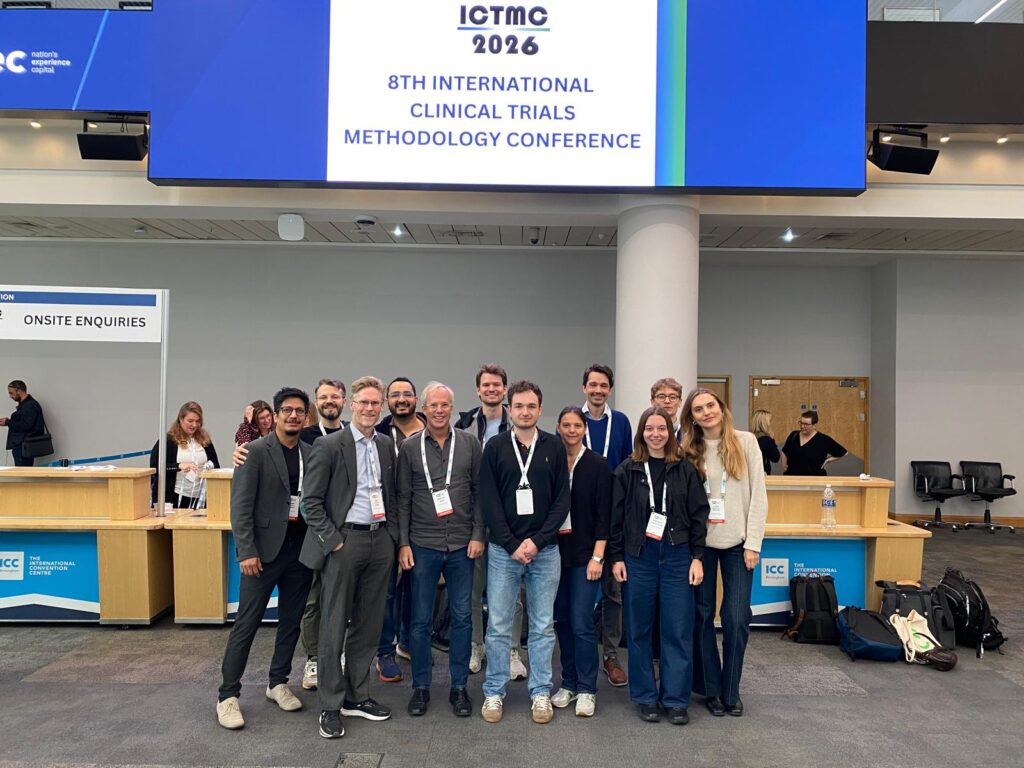
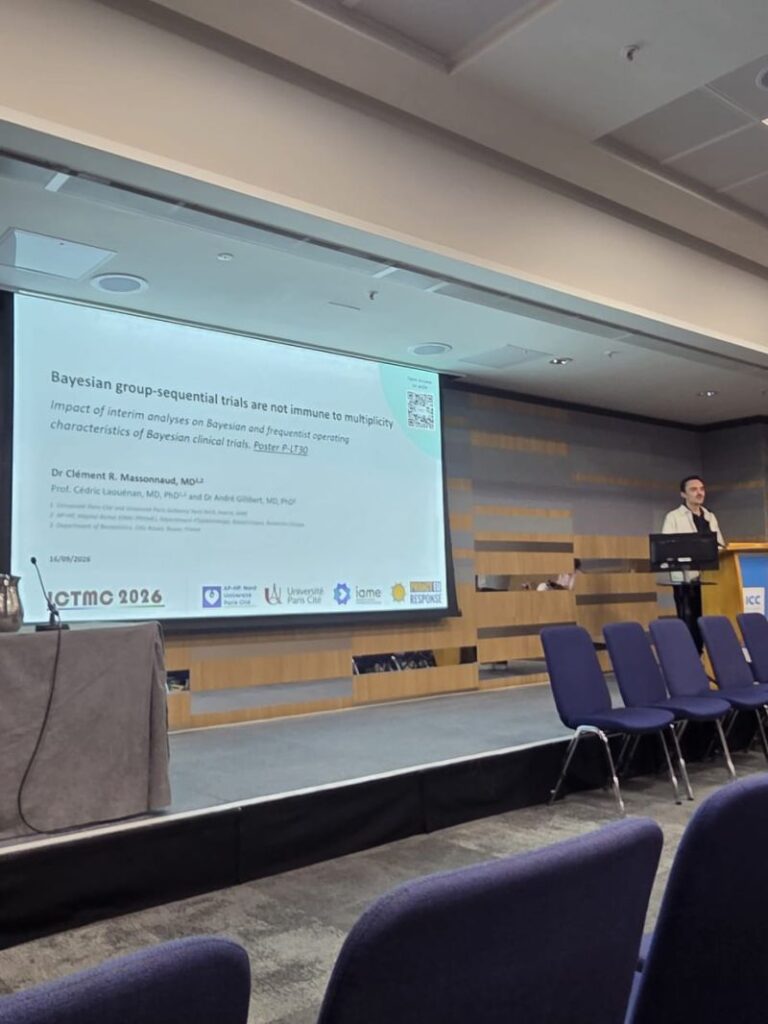
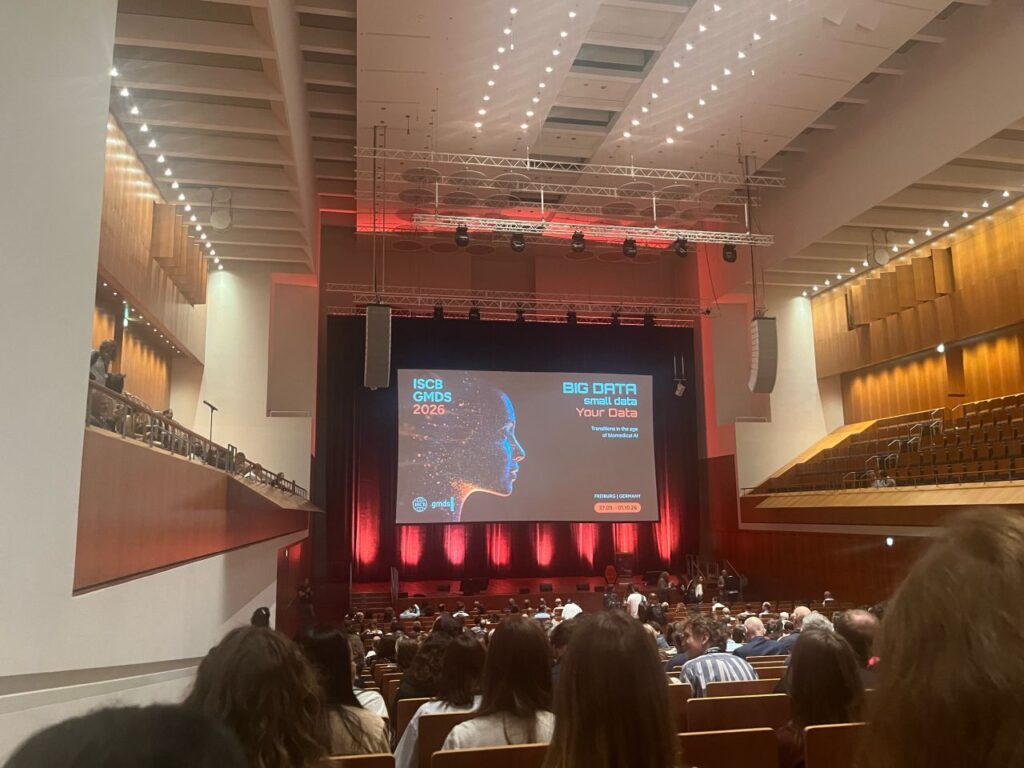
September and early October were busy for PROACT EU-Response partners, who presented their work and exchanged ideas with clinical trials and biostatistics communities at conferences in Birmingham, Freiburg and Rome. Discussions covered how research can strengthen Europe’s preparedness for future pandemics, including through better study design for respiratory infections and more flexible clinical research networks.
International Clinical Trials Methodology Conference (14 -17 September 2026), Birmingham
Partners presented work on adaptive platform trials. This included the EU-SyndAct poster, “An Adaptive Umbrella Platform Protocol with Built-In Pandemic Pivot Capability”, presented by Tonton Mutamba Kayembe and Inge Christoffer Olsen of Oslo University Hospital. The poster described how adaptive platform studies can evaluate several treatments at once and adapt as evidence on their efficacy and safety emerges, including by switching into pandemic mode. Partners also shared work on EU-SolidAct’s platform trial design and related research connected to PROACT EU-Response.
Annual Conference of the International Society for Clinical Biostatistics (27 September – 1 October 2026), Freiburg
Partners from Oslo University Hospital, the University of Galway, the Medical University of Vienna, the University of Basel and Sorbonne Université/INSERM led a workshop on the methodological, operational and regulatory challenges of designing clinical studies for respiratory tract viral infections, including in pandemic settings. Partners also shared work from the COSAVRI study, which is developing a ‘core outcome set for trials of treatments for adults hospitalised with acute viral respiratory infections’ (COSAVRI). Agreeing on outcomes that trials should measure and report on can make research findings easier to compare and easier to identify which treatments work best.
EuCARE Conference (1- 2 October 2026), Rome
Rome brought together researchers, healthcare professionals, policymakers and European projects to discuss research findings and priorities for future pandemic preparedness. Sessions covered clinical outcomes and Long COVID, vaccination and immunology, and the social and educational effects of epidemics, including on children and schools. The discussions aimed to bridge research and policy and contribute to a shared European statement on preparedness.
PROACT EU-Response Coordinator, Professor Karine Lacombe of Sorbonne Université and AP-HP, represented the project in the closing roundtable, “Bridging the Gap Between Research and Policy: towards a shared statement for preparedness”, which she co-moderated with Professor Evelina Tacconelli. In her presentation, “Building a clinical network for pandemic preparedness: lessons from PROACT EU-Response”, Professor Lacombe drew on the experience of the DisCoVeRy and EU-SolidAct adaptive trials during the COVID-19 pandemic. She described how PROACT EU-Response is building on that experience through a European network of 83 clinical sites in 25 countries, organised around EU-SyndAct and supported by methodology teams, harmonised virology laboratories and patient involvement.
Her presentation highlighted four lessons:
- Keep the trial platform active between crises;
- Make participation flexible;
- Invest in legal, regulatory and laboratory harmonisation; and involve patients from the start.
- It also set out priorities for policymakers, including stable funding between crises, pre-approved protocols with faster ethics review, and stronger coordination between European clinical research platforms.
The experience of DisCoVeRy and EU-SolidAct showed us that preparedness cannot start when a new crisis begins. We need to keep clinical trial platforms active between crises, with flexible participation, harmonised processes and patients involved from the start.” Prof. Karine Lacombe
Across these events, partners shared how adaptive trials, coordinated research networks and patient involvement can help strengthen Europe’s readiness for future respiratory health threats.